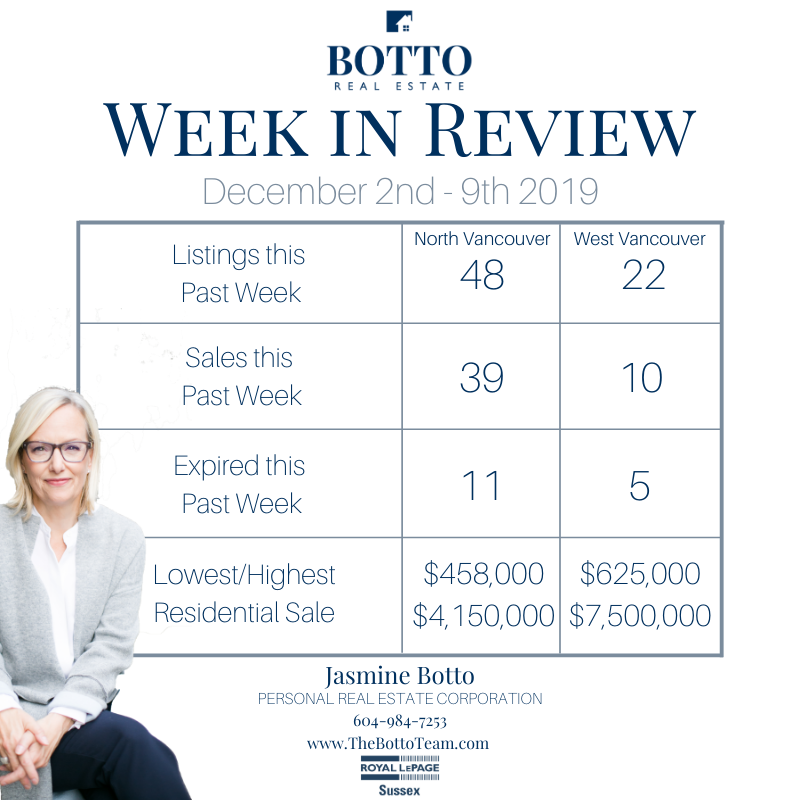
The Week in Review
But with phone lines jammed, and websites unable to process applications that are assessed on a case-by-case basis, many homeowners looking for a deferral or seeking answers have had little success.
Confusion reigns over what makes a homeowner eligible for an emergency deferral, how the program works, whether interest is payable and whether deferring payments will affect credit scores. Unfortunately, with the situation changing on a daily basis, and lenders forced to make up rules as they go, it has been impossible for most people to get any information.
To clear up some of these issues, Glacier Media Real Estate spoke with five mortgage experts who offered their insights and advice on some frequently asked questions.
You would have to visit your local pharmacy or science lab to rival the number of potentially dangerous chemicals in the average home. You likely store everything from fertilizers to acidic cleaners to gasoline and corrosive drain openers. Obviously, it makes sense to ensure that everyone in your home uses and stores such items safely.
For example, laundry detergent packs – which have become popular recently – are attractive to children. Keep them locked and out of sight. You should do the same with all laundry products. Even exposure to fabric softener pads can cause skin irritation to a child. Always read and follow the labels on household chemical products. Use and store them as directed.
Keep corrosive, such as harsh cleaners and drain openers, separate from other chemicals and in a place where, should they leak, they will cause minimal or no damage. Also never put a chemical in anything other then its original container. You don’t want to take the chance that paint thinner stored in an old water bottle, for example, is mistaken for water!
Finally make sure you have the phone number to your local poison control center in a handy place, such as your fridge door. You can find a list of numbers at www.CAPCC.ca
"Staging" you home is all about making the space in your home as appealing as possible to buyers. You may already know the basics, such as eliminating clutter. Here are some other tips that are less well known yet very effective:
Want more tips on how to stage your home so that it attracts buyers? We have more ideas! In fact, every Seller receives a FREE STAGING CONSULT prior to listing their home for sale. Call us at 604-984-7253 to learn more.
It’s exciting to put a house on the market and to think about making new memories in new spaces, but we can have deep sentimental attachments to the homes we’re leaving behind, too. Growing emotions can help or hinder a sale, depending on how we manage them.
When it comes to the bottom line, homeowners need to know what it takes to avoid costly mistakes. Being mindful of these things and prepared for the process can help you avoid some of the most common mishaps when selling your house.
When inventory is low, like it is in the current market, it’s common to think buyers will pay whatever we ask for when we price our homes. Believe it or not, that’s far from the truth. Don’t forget that the buyer’s bank will send an appraiser to determine the fair value for your home. The bank will not lend more than what the house is worth, so be mindful that you might need to renegotiate the price after the appraisal. A real estate professional will help you to set the true value of your home.
Today, most homeowners have been living in their houses for an average of 10 years.
This is several years longer than what used to be the norm, since many homeowners have been recouping from negative equity situations over the past 10 years. The side effect, however, is when you live for so long in one place, you may get even more emotionally attached to your space. If it’s the first home you bought after you got married or the house where your children grew up, it very likely means something extra special to you. Every room has memories and it’s hard to detach from the sentimental value.
For some homeowners, that makes it even harder to negotiate, separating the emotional value of the home from the fair market price. That’s why you need a real estate professional to help you with the negotiations in the process.
3. Not Staging Your Home
We’re generally quite proud of our décor and how we’ve customized our houses to make them our own personalized homes, but not all buyers will feel the same way about your design. That’s why it’s so important to make sure you stage your home with the buyer in mind. Buyers want to envision themselves in the space, so it truly feels like their own. They need to see themselves in the space with their furniture and keepsakes – not your pictures and decorations. Stage and declutter your home so they can visualize their own dreams as they walk through your house. A real estate professional can help you with tips to get your home ready to stage and sell.
Bottom Line
Today’s primarily Seller’s market might be your best chance to make a move. If you’re considering selling your house, sit down with a local real estate professional to help you navigate through the process while avoiding common seller mistakes.
1. Buying a Home is a Great Investment
Several reports indicate that real estate is a good investment, topping other options such as gold, stocks, bonds, and savings. Why? Real estate helps build equity, a form of investing for you and your family. According to this Royal LePage Report,
“Canadian home prices are expected to see healthy appreciation by the end of 2020, driven by low single-digit appreciation in both the condominium and detached home segments. The decline in high price appreciation in the condominium segment, in recent years, reflects a shift in millennial demand towards houses and is expected to reinvigorate sales activity in the suburbs.”
If you want to start building your equity, put your housing costs to work for you through homeownership this year.
2. Mortgage Interest Rates Are Low
While interest rates have risen since 2016 (see recent history here), rates are still the lowest they have been over the majority of the last 25 years. When you purchase a home at a low mortgage rate, it will impact your monthly mortgage payment, giving you the opportunity to buy more house for your money.
3. Investing in Your Family is a Win
There are some renters who haven’t purchased a home yet because they’re uncomfortable taking on the obligation of a mortgage. Everyone should realize that, unless you’re living rent-free with your parents, you’re paying a mortgage – either yours or that of your landlord.
Today, rental prices continue to increase, and when you’re paying your landlord’s mortgage instead of your own, you’re not the one earning the equity. As an owner, your mortgage payment is a form of ‘forced savings’ you can use later in life to reinvest in your family. You can use it for a variety of opportunities, such as saving for your children’s education, moving up to a bigger home, or starting your own business. As a renter, it can be more challenging to achieve those types of dreams without home equity working for you.
Bottom Line
Buying a home sooner rather than later could lead to substantial savings and long-term financial growth for you and your family. Reach out to a local real estate professional to determine if homeownership is the right choice for you this year.
In today’s real estate market, more houses are coming to market every day. Eager buyers are searching for their dream homes, so setting the right price for your house is one of the most important things you can do.
According to Royal Lepage’s Regional House Price Survey, The Greater Vancouver real estate market continues to see year-over-year price declines, which has attracted considerable interest from buyers and spurred sales.
With prices slowing from their previous pace, homeowners must realize that pricing their homes a little over market value to leave room for negotiation will actually dramatically decrease the number of buyers who will see their listing.
Instead of the seller trying to ‘win’ the negotiation with one buyer, they should price their house so demand for the home is maximized. By doing so, the seller will not be negotiating with a buyer over the price but will instead have multiple buyers competing with each other over the house.
The secret is making sure your house is Priced To Sell Immediately (PTSI). That way, your home will be seen by the most potential buyers. It will sell at a great price before more competition comes to the market.
Bottom Line
If you’re debating listing your house for sale, reach out to a local real estate professional to discuss how to price your home appropriately and maximize your exposure.
January 09, 2020 - Courtesy of the Real Estate Board of Greater Vancouver
Property owners received their 2020 assessment notices in the first week of January, which reflects the market value as of July 1, 2019. Assessments for strata units throughout Greater Vancouver decreased with West Vancouver leading with a decline of 10 per cent, followed by Burnaby, Coquitlam, New Westminster, and North Vancouver District which all dropped by nine per cent, followed by Richmond with an eight per cent decrease.
Assessments for detached homes were also lower, with West Vancouver again leading the way with a 16 per cent decrease. Coquitlam, Port Moody, and Vancouver all saw an 11 per cent decrease, while Maple Ridge and Pitt Meadows each dipped six per cent.
Only three communities saw increases for detached homes: Whistler (5%), Pemberton (5%), and Squamish (0.3%).
For new construction or substantially renovated homes, the estimate is based on the physical condition as of October 31, 2019.
Property owners can also see a property’s assessment searching the address on BC Assessment’s (BCA’s) website.
Details include a photo, a property description (land and buildings), the total assessed value, the previous year’s value, the legal description, and property ID.
If property details are incorrect, property owners are directed to complete and submit an e-valueBC Data Validation Form. Property owners can also compare neighbouring properties and sample sold properties to decide whether their property has been correctly assessed. Deadline to appeal assessment is January 31, 2020.
Property owners who disagree with their assessment should do homework by:
Property owners who decide to appeal their property assessment should review information on the Property Assessment Appeal Board website on how to prepare for an appeal and then complete a Notice of Complaint (Appeal) Form.
Each year less than one per cent of BC property owners appeal their assessments.
Note: you can’t appeal your taxes. You can only appeal your assessment.
For information about BCA, visit their website or phone 1-866-valueBC (1-866-825-8322).
Read more about Greater Vancouver assessments.
Did you know?
Property tax
Property taxation is determined by local and provincial taxing authorities after determining their budget needs and calculating property tax rates based on the assessment roll for their jurisdiction.
Municipalities determine tax rates for each property class in the spring, once the assessment roll is finalized. Changes in assessment over the year don’t automatically translate into the same percentage changes in property taxes for any particular class of property or for any individual property.
Questions? Contact BCA.
Home Owner Grant thresholds drop
The Home Owner Grant a provincial grant which reduces the amount of property tax an owner pays. To qualify you must:
The Home Owner Grant threshold applies across the province. The amounts are:
The grant is available to owners of property assessed at up to $1.525 million in 2020, down from $1.65 million in 2019 to accommodate the decline in home prices.
The grant is reduced by $5 for each $1,000 of assessed value over $1,525,000. This means properties assessed up to $1,639,000 ($1,679,000 in a northern and rural area) can receive a partial regular grant.
In northern and rural areas, the basic grant fully phases out at $1,804,000 and the higher grant at $1,859,000.
If you haven't yet received your 2020 Property Assessment, you will shortly. Whether buying, selling, or just home-owning, here are 5 important things to know:
(1) 2020 marks only the fifth time since B.C. Assessment’s inception in 1974 — and the first time in 20 years — that the province’s assessed values saw an overall decline. (B.C.’s overall assessment values also decreased in 2000, 1999, 1987 and 1983).
(2) Just because your Assessment went down, it doesn’t necessarily mean your TAXES will decrease. That’s because every municipality still needs to raise enough revenue to fund its annual operations. Here’s a great article to read: https://bit.ly/36oXJp3
(3) BC Assessment uses a mass appraisal system, which calculates property value by evaluating prices for homes sold in each neighborhood and then applies the information to arrive at an assessed value. This information is typically obtained from MLS sales, not by visiting the properties in question. BC Assessment has approximately 650 full-time staff positions in 17 offices throughout the province. They can’t possibly visit every residence.
(4) The most important factor is the TIME at which a property is assessed. A 2020 Assessment notice is BCA’s estimate of a property’s market value as of July 1, 2019, which is 6 month’s prior to you receiving your assessment. (and the reason why current Market Value can be different – as it reflects a more current state of the market).
(5) Good news – the Home Owner Grant threshold has been set lower! This year: $1.525M and last year: $1.65 M.
Bonus #1-
Here are the median price changes in North Vancouver, so you can see how your Assessment may not necessarily equal true, current market value:
July 2018 - July 2019 Dec 2018 – Dec 2019
(Assessment period) (Year over year data)
Detached down 9% down 7%
Attached down 9% down 2%
Apartments down 9% up 9.5%
Bonus #2 –
Here is a service that you may find helpful – available now until March, where you can view details on a single property, compare neighbouring properties, and compare sales information. http://evaluebc.bcassessment.ca/